Physiotherapy for
herniated disc
Rated 5.0 by 70+ locals.
DON’T LET A HERNIATED DISC STOP YOU FROM MOVING COMFORTABLY.
A herniated disc can cause back or neck pain that makes sitting, bending, exercising, or sleeping uncomfortable. Symptoms vary depending on the affected disc and nearby nerves.
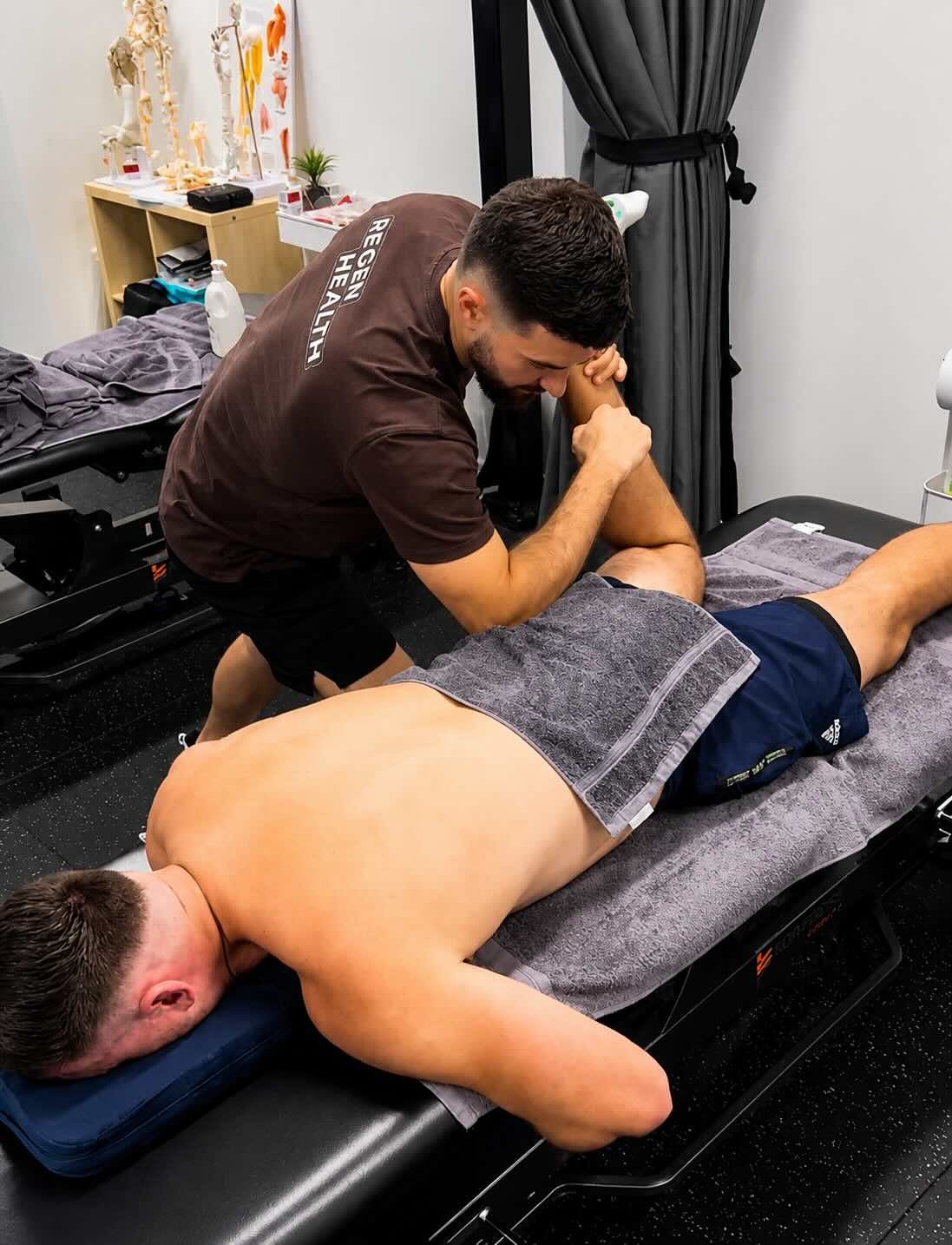
At Regen Health, our physiotherapists assess your symptoms, movement, and function. We then develop a treatment plan to address pain, stiffness, weakness, and related nerve symptoms.
Treatment may include deep tissue massage, dry needling, or practical advice to improve comfort and strength. We’ll also consider your work, exercise, and daily activities when planning your recovery.
If disc pain is getting in the way of your day, book an appointment with our team and get the right support for your recovery.

Herniated Disc Explained
A herniated disc can affect movement, comfort, and everyday activities. Here’s what you need to know about the condition and how physiotherapy may help.
-
A herniated disc occurs when material within one of the discs between the vertebrae pushes through its outer layer. This can irritate nearby structures or nerves. Factors that may contribute include:
Repeated bending, lifting, or twisting movements
Sudden strain while lifting or moving a heavy object
Age-related changes that affect the discs over time
High physical loads at work, during sport, or while training
Previous back or neck injuries that affect movement and function
-
Symptoms can differ depending on the location of the affected disc and whether a nearby nerve is involved. Common symptoms can include:
Localised pain in the lower back or neck
Pain that travels into an arm, buttock, or leg
Tingling or numbness along the affected nerve pathway
Muscle weakness in the arm, hand, leg, or foot
Discomfort that increases with certain positions or movements
-
Disc problems can develop in different areas of the spine, with symptoms varying according to the affected level. Common presentations include:
Lower back pain associated with a lumbar disc problem
Sciatic-type pain travelling through the buttock and leg
Neck pain associated with a cervical disc problem
Pain that travels from the neck into the shoulder or arm
Pins and needles or numbness in an arm or leg
Reduced movement or difficulty with everyday physical tasks
-
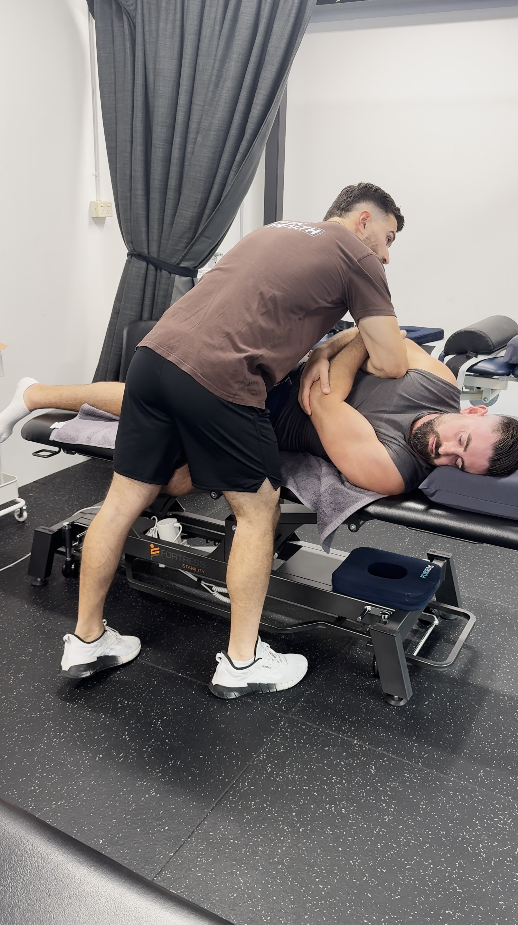
Physio for a herniated disc starts with assessing your symptoms, movement, strength, and everyday activities. Your physiotherapist can then develop a rehabilitation plan based on what you’re experiencing and what you want to get back to.
Treatment may involve hands-on therapy, graded strengthening exercises, mobility work, movement retraining, and advice on managing activities that aggravate your symptoms.
As symptoms settle, rehabilitation can focus on rebuilding strength, improving movement, and gradually returning to work, exercise, sport, and normal daily activities with greater confidence.

Get Back to Moving Without Holding Back.
A herniated disc can affect much more than your spine. Pain, stiffness, or nerve symptoms can make work, exercise, sleep, and everyday movement harder. Our team focuses on helping you manage symptoms and restore comfortable, confident movement.
We take a personalised approach to disc rehabilitation, adjusting treatment as your movement and strength improve. Your plan is tailored to your symptoms, goals, and daily activities.
We aim to help you move well, build strength, and return to everyday life with confidence. Book your physiotherapy appointment today and take a practical step towards getting back to the things you enjoy.
Herniated Disc Physio FAQ
-
Many people with a herniated disc are managed without surgery. Physiotherapy may form part of conservative treatment by helping you manage symptoms, restore movement, build strength, and gradually return to normal activities. Your treatment will depend on your symptoms and clinical assessment.
-
Complete rest generally isn’t the goal. Your physio can help you identify movements and activities you can continue safely while temporarily modifying those that aggravate your symptoms. Activity can then be gradually increased as your comfort and capacity improve.
-
That depends on your symptoms, current capacity, and the exercises involved. Rather than stopping training altogether, your physiotherapist may recommend adjusting loads, exercise selection, technique, or range of movement while you recover.
-
A lumbar disc problem can sometimes irritate a nerve that travels from the lower back into the leg. This may cause radiating pain, tingling, numbness, or other symptoms away from the spine, which is why your assessment looks beyond the painful area itself.
-
Not necessarily. A physiotherapist can assess your symptoms, movement, strength, and neurological signs to determine an appropriate course of action. If your presentation suggests imaging or further medical assessment may be appropriate, they can discuss the next steps with you.
-
Seek urgent medical attention if back or neck symptoms are accompanied by significant or worsening weakness, loss of bladder or bowel control, numbness around the groin or saddle area, or other rapidly progressing neurological changes.